Duration: 2022, Jan-Jul, 7 months
Role: End-to-end UX/UI designer
Client: Concept project
Billy App: Fintech made easy
A finance app that makes managing money feel clear, friendly, and doable.
Turning money stress into daily progress, not a guilt trip.
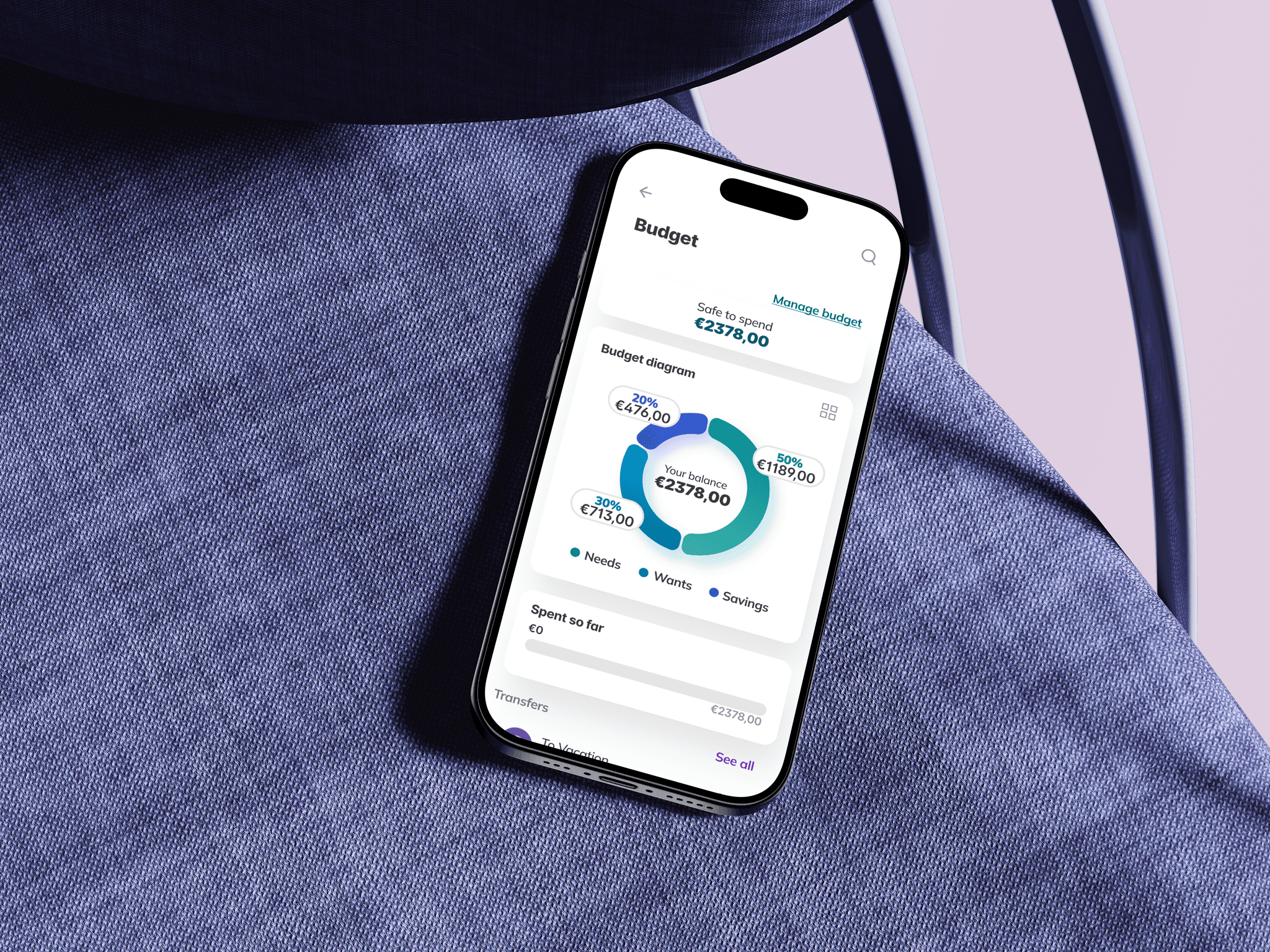
Billy is a personal finance web app designed to help people with low financial literacy feel empowered, not overwhelmed when managing their money.
I led this solo project from idea to high-fidelity prototype, applying research, psychology, and product thinking to create a tool that’s helpful, human, and even a little fun.
That's why the name "Billy" - managing money shouldn’t feel like a chore.
Users avoid money tasks. Tools fall short
Many people feel overwhelmed by their finances. Despite the boom in the fintech, 44% of Europeans feel stressed just checking their balance. Most tools focus on transactions, not behaviour - and rarely consider users who avoid money tasks altogether.
Insights: guidance beats features
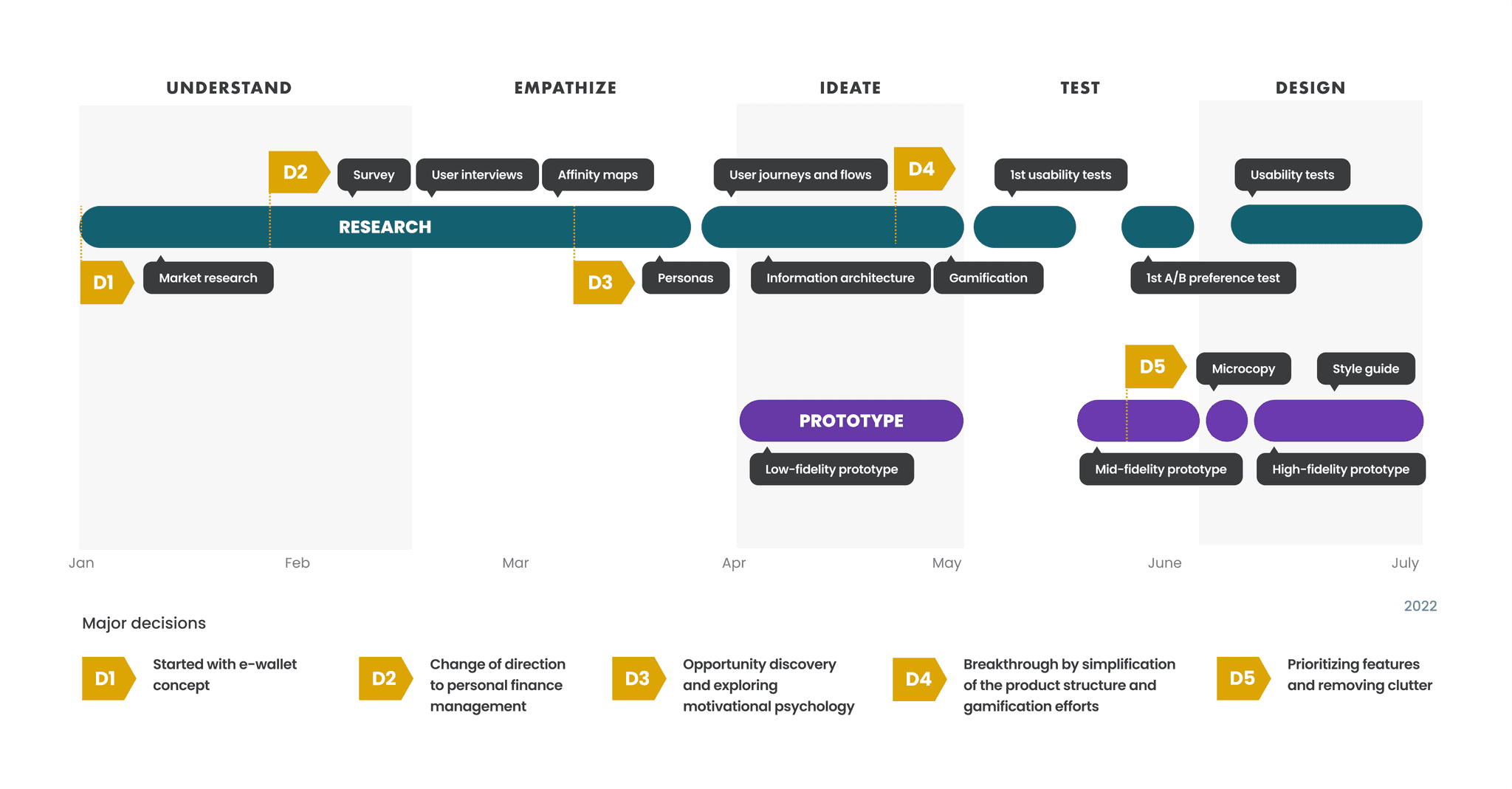
Survey (15 respondents, age 18–55): 79% used fintech just for transfers; 93% wanted to learn about saving, budgeting, and debt.
Competitive analysis: Reviewed Mint, Revolut, Acorns — none offered hands-on learning or real behavior change.
User interviews & affinity mapping: Found patterns of financial avoidance, lack of confidence, and need for motivation.
Key takeaway: Unless faced with imminent financial problems, users grow complacent and mostly didn’t take action regarding their finances. People don’t just need tools—they need guidance.
*Is offering articles and notifications about approaching spending limits enough to enlight users of their financial behaviour?
Behaviour, guided by design
After user stories and affinity maps defined 3 personas, including Ellie—a single mom juggling multiple apps but struggling with confidence, time, and know-how.
This helped me focus features on:
Reducing anxiety
Encouraging consistency
Making small wins feel rewarding
*Discovered an opportunity: How might we create an platform that helps everyday Joe develop better financial behaviour?
A structure that gets out of the way
Using hybrid card sorting and user feedback, I simplified the entire information architecture:
Flattened navigation for faster task completion
Removed jargon
Streamlined entry points
Progress you can see, feel, and stick with
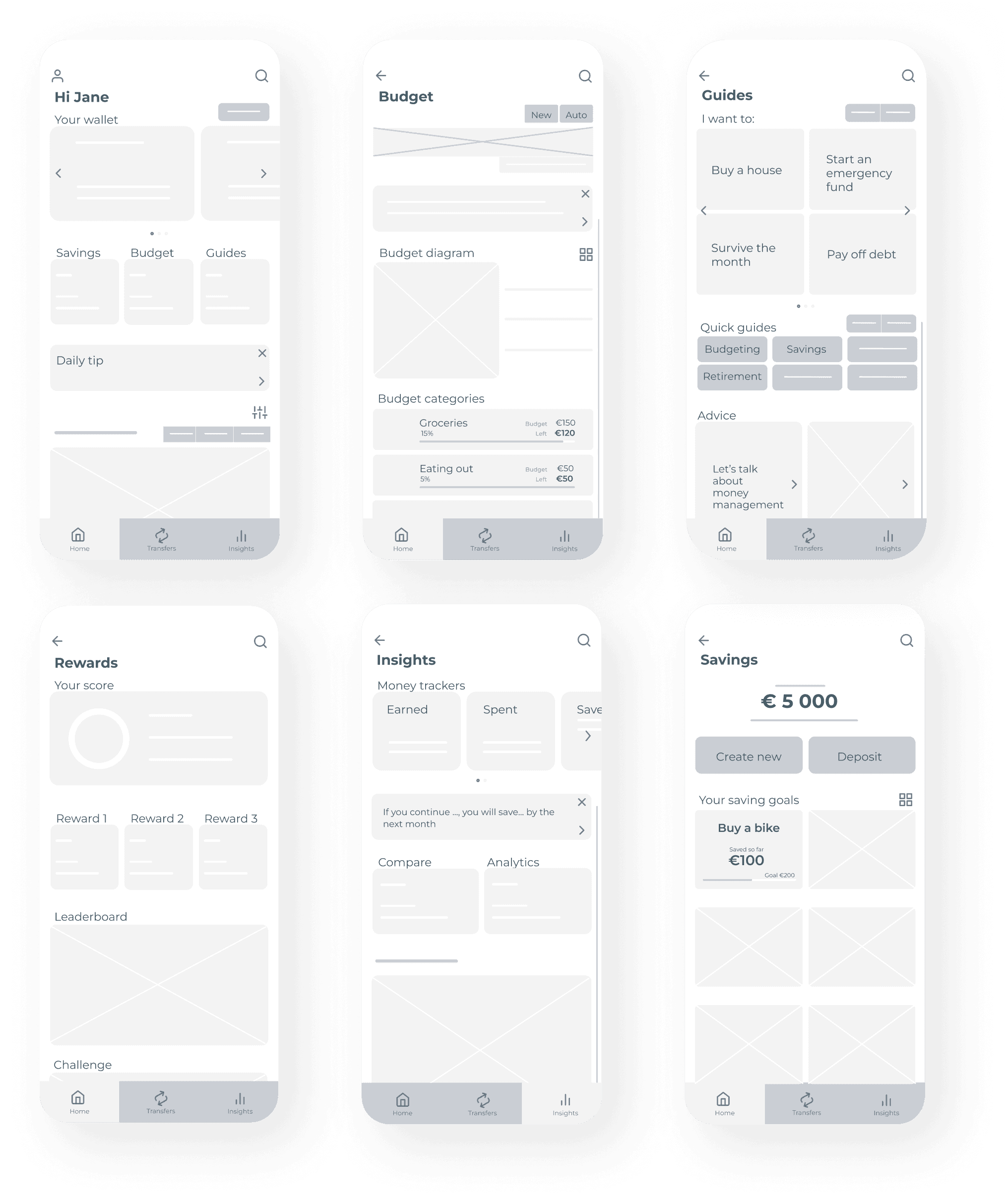
I tested 6 core features through early sketches → mid-fidelity prototypes → high-fidelity UI. Did A/B & usability testing.
This served well in creating the tone and voice of the app, adding tooltips for clarity and simplifying it even further, e.g. guides feature fell off due to time limitations.

TA-DA!
Gamification
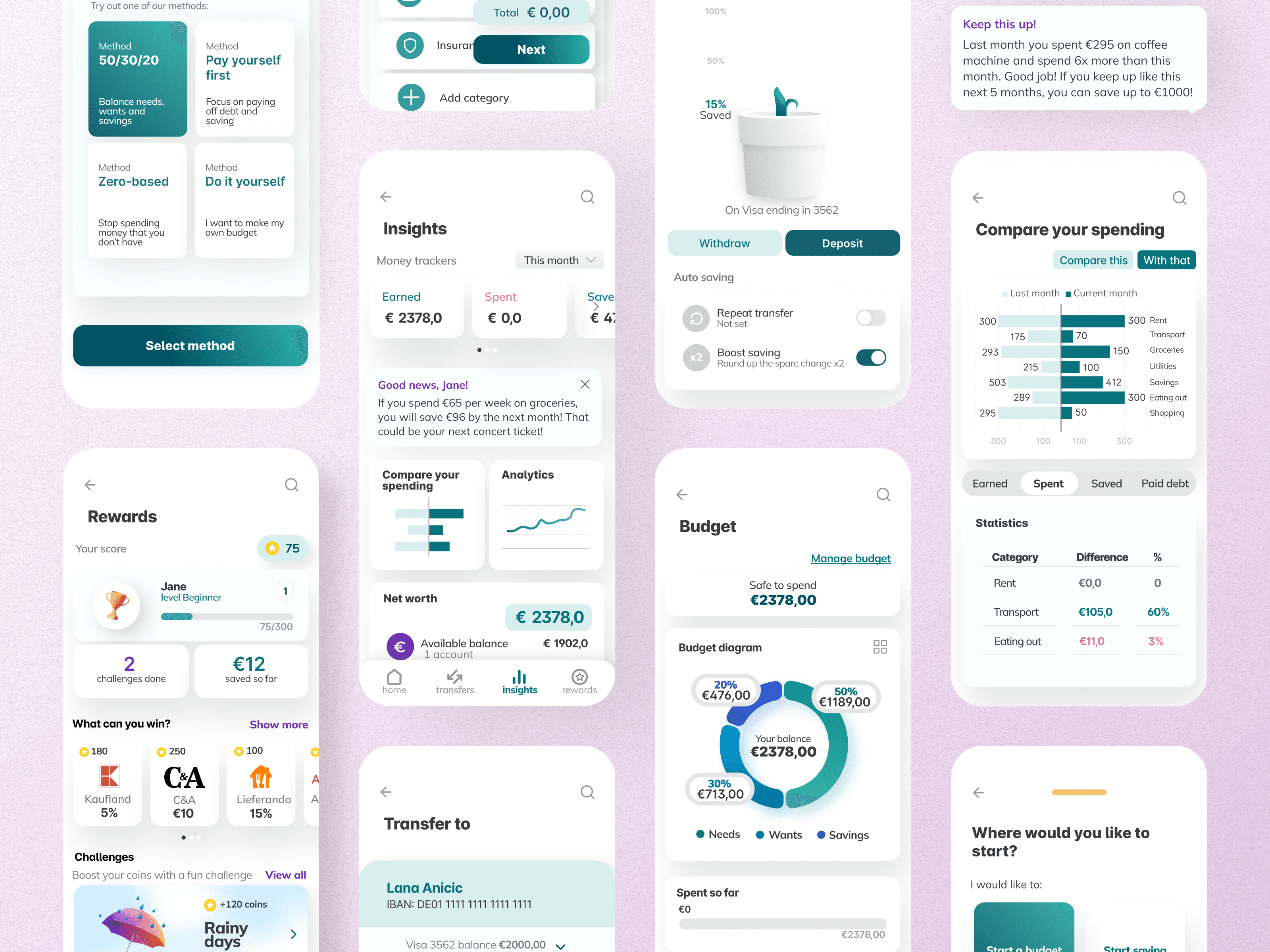
Points, achievements, leaderboards and visual progress - like growing plants and saving jars to transform the intimidating financial tasks into an rewarding experience that motivates people to stick to their goals.
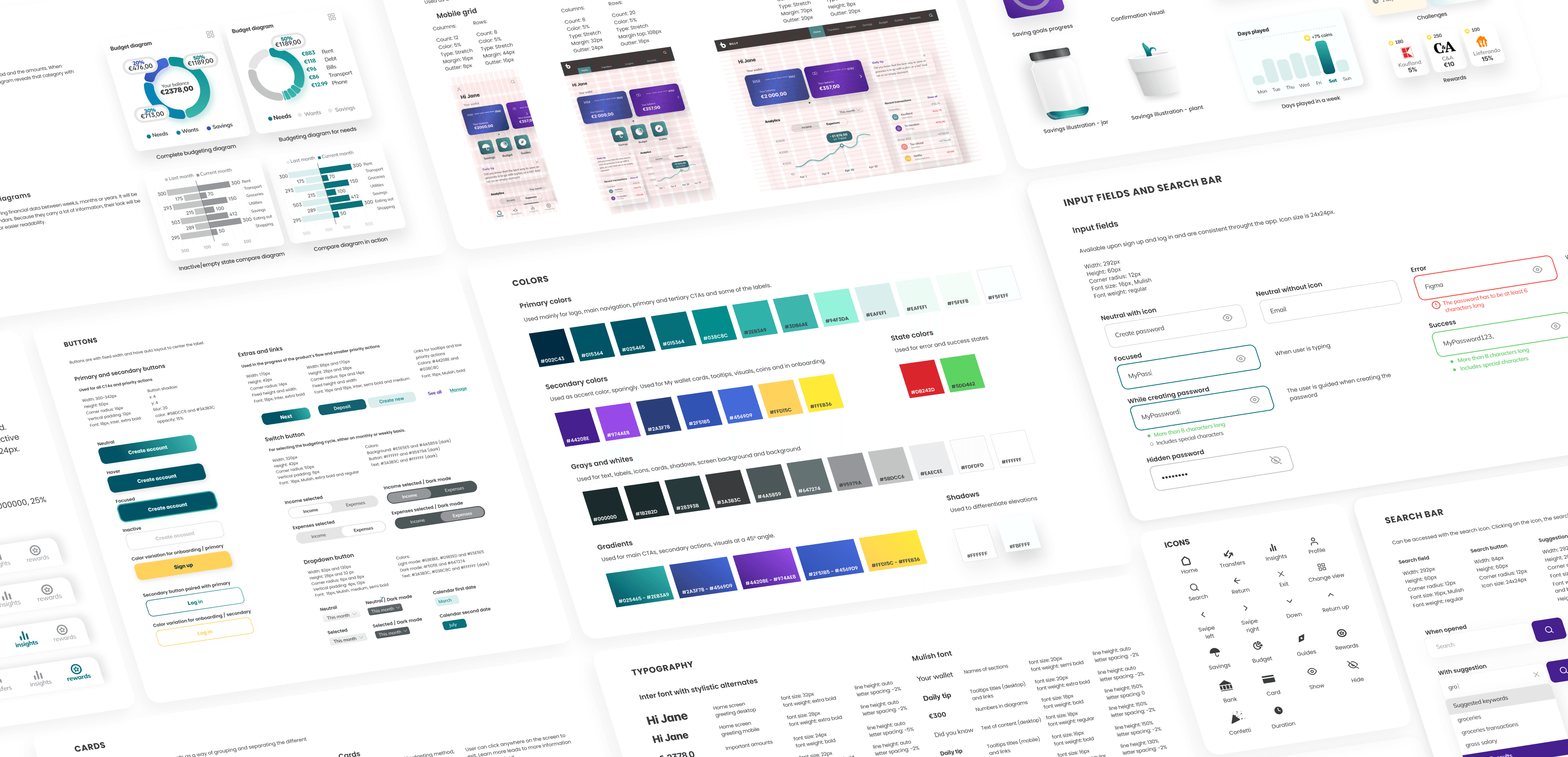
Style guide as a side quest
Clarity, consistency, and a tone that feels like a helpful friend. Clean, minimal look, easy navigation, consistent spacing, and accessibility built in.
Takeaways
Billy wasn’t about adding more fintech features — it was about designing for real human behaviour: low literacy, low motivation, high anxiety, and limited time. Every decision was research-led, tested, and simplified until it earned its place. This project shaped how I design: I design for avoidance, not ideal users; I prioritise clarity over cleverness; and I use tone, structure, and micro-interactions as tools for behaviour change.